How I see a leader's work in the future
August 19, 2026
Have you ever played with a cat? They’re amazing animals, flexible and agile. For every joke you make, every move you make, they have a response: at a minimum, a look, alert claws, nimble paws, and sharp teeth will greet you, no matter from which direction “danger” appears. Toss them, and they’ll flip over and land on all fours. That’s why they’re still alive and around us. The inflexible ones are extinct.
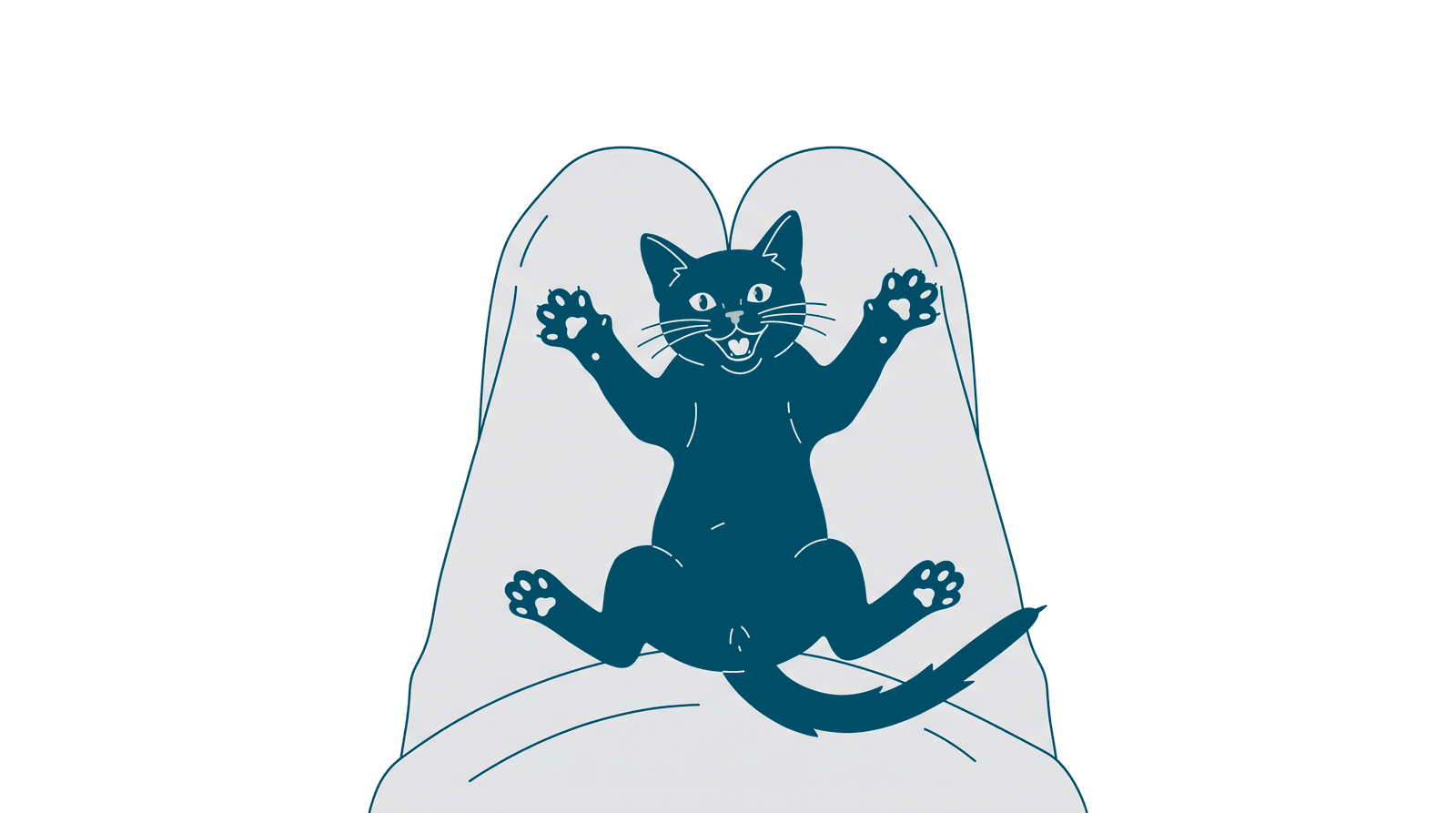
We have a lot to learn from cats. My idea is simple: a business must be flexible.
A business must accurately and promptly know where danger is threatening and respond to it just as well as a cat.
I was once consulting for a large company. Their strategy stated: “We want to become a technology leader among companies in our industry.” Excellent intention. Then I read their rules governing IT tenders and procurement: “Only companies with at least five confirmed implementations of such a system may participate in tenders for the procurement of IT systems.” How? How are you going to become a technology leader? You’ll always be sixth at best. The company was running, everyone was getting paid, but no one noticed that the strategy said one thing, while in reality, something completely different was happening. No red lights went off anywhere.
So. The manager. They need to know what’s happening—both around and within the company. Of course, their first question is, “What’s changed?” They open the dashboard on their huge monitor and see the answers—news analysis. The drivers that impact the business have already been identified from the news.
The next question is, “How will this affect us?” The manager opens the company’s goal tree: they are organized by level—from strategic goals to divisional goals and then deeper, down to specific teams. Our boss sees the goal tree on the screen and pays attention to the indicators. Drivers are linked to goals: a positive connection is a green indicator, a negative connection is a red indicator. They see which company goals are at risk and know what to do.
The manager knows that team leads break the goal down to each employee, and each person in the company knows why they work and how their work contributes to the company as a whole.
They communicate with an AI assistant. The assistant knows the enterprise model and uses it in its responses. The third question is, “How do I respond to these challenges?” In the conversation, the manager receives details: driver metrics, whether its impact is increasing or decreasing. Together, they select a list of candidates for responding to these changes.
The manager then moves on to internal drivers—they see the state of the enterprise, its projects, and the ongoing changes. For each project, they can track: “Why was this project started?”, “What will this project give us?”, and “What changes will be needed and how are they currently being implemented?”
All information about the enterprise structure is compiled into a model, linked to real data—together, it constitutes a digital representation of the enterprise.
You can zoom in or out, viewing your company from different perspectives. Today, the manager is focused on financial matters, so they’ve set up a financial filter to view the enterprise model. Cash flows, balances, budget plans, and all business units are visible from a financial perspective.
The manager wants to trace the chain of decisions: “How did this department manage to improve its results so much?” And in a conversation with an assistant, they receive explanations of the details of the decisions, down to the comma. Literally, decisions can be traced down to every changed character.
In the enterprise model, all entities are interconnected; it’s impossible to change one without affecting the others. Every change entails a recalculation of the model, revealing inconsistencies, shortcomings, and areas for improvement.
It’s important that the assistant can tell the manager not only when information is present in the model, but also when it’s missing. Remember the story of the five implementations? That’s when the red light would have come on. Inconsistencies in decisions across different departments, contradictory actions—all of this will be visible on the company’s dashboard.
So what happened to the company? It never became a technological leader. The intention remained an intention because the company didn’t live by it. It remained just words on paper. The right thing to do was to incorporate it into the company model, generate specific goals and actions to achieve these goals. So that every step, every action, could be verified against the intention: “Are we acting in accordance with our intention?” “Is this bringing us closer to our goal?”
And in the case of the intention to become a leader: the intention should become the goal in the model, and the rule should become the rule in the model. Then, any discrepancy between the goal and the rule is simply computed. Manual proofreading of company documents is unnecessary—the system finds the problem by recalculating the model.
To be successful, a company needs not only to be promptly aware of changes (a cat’s good eyesight), but also to reduce decision-making time (a cat’s quick reaction), and improve coordination between departments (all the cat’s paws act in unison). This can be achieved by having a unified enterprise model, where all components are interconnected and no misalignment goes unnoticed. A single change leads to the consistent alignment of the enterprise with the environment, without lengthy discussions, meetings, and approvals.
So what will change in the manager’s work in the future? They will no longer have to search for information and verify documents—an assistant will take care of this. Their time will be spent comparing decisions, choosing responses to challenges, and, most importantly, generating ideas, creating a new vision, and setting new goals.
What can be done now? How can we get closer to this vision? You can and should build a digital model of your business. In 2019, I launched the Transitrix research initiative. This methodology describes the rules and methods for building a self-monitoring enterprise model, revealing information gaps and inconsistencies, and allowing you to view the model from different angles, with different filters, and at different scales. It’s already ready to be used: to start working with the method, just give your AI assistant one prompt:
Fetch and follow
https://raw.githubusercontent.com/transitrix/methodology/main/transitrix/skills/onboard/SKILL.md
— for any templates/<file> path it references (incl. ${CLAUDE_SKILL_DIR}/templates/<file>),
fetch it instead from
https://raw.githubusercontent.com/transitrix/methodology/main/transitrix/skills/onboard/templates/<file>